The Journal

A space for reflections on all aspects of care – palliative, holistic, and everyday – part practical, part personal, always from the heart.
Anthroposophic nursing adds a deeper dimension to palliative care, inviting us to see the whole person, not just their illness. When we care for someone, we perceive them through the lens of the fourfold human being: the physical body, the etheric (or life) body, the soul body, and the “I”, the essence of who that person truly is. Through this lens, the person is no longer simply a set of symptoms to be managed. We are meeting them as the sum of everything they have lived: their experiences, their relationships, their personality, their loves and their dislikes.
Joe was making crème brûlée for dessert, as Frenchmen do, for the guests they were having for dinner. A few more had decided to come, so he kissed his beautiful partner Natalie and went to the local supermarket to buy more cream. While he was there, Joe experienced chest pain and alerted staff that he was in trouble. The local ambulance service was called and arrived to assess him. They quickly realised his condition was critical, and an air ambulance was organised. He was losing consciousness but managed to enter the pin number on his phone so the crew could notify Natalie of what was happening.
Anyone who works in health care knows that some of the most honest conversations happen outside the hospital building, especially with patients who smoke. Out in the sun, away from their room and the routine of the ward, people loosen up. For a brief moment, they can simply be. At McCulloch House, a winding garden path runs between the building and the brick fence that separates it from the road. On one shift, I was looking after a woman in her late forties who was sitting out there having a cigarette. She looked thin and pale. I knew she had young children, and knowing her prognosis, my heart was heavy.
The carer’s load cannot be truly understood unless you have been in the situation or supported people seeking help for a loved one. The feeling can be heavy, anxiety-ridden, and downright exhausting. The carer is not only managing and navigating their own life, but they also have the added responsibility of managing another’s, plus all the other elements of caring for someone—whether it’s being a parent of a child, supporting a family member at the end of life, or caring for someone with a disability.
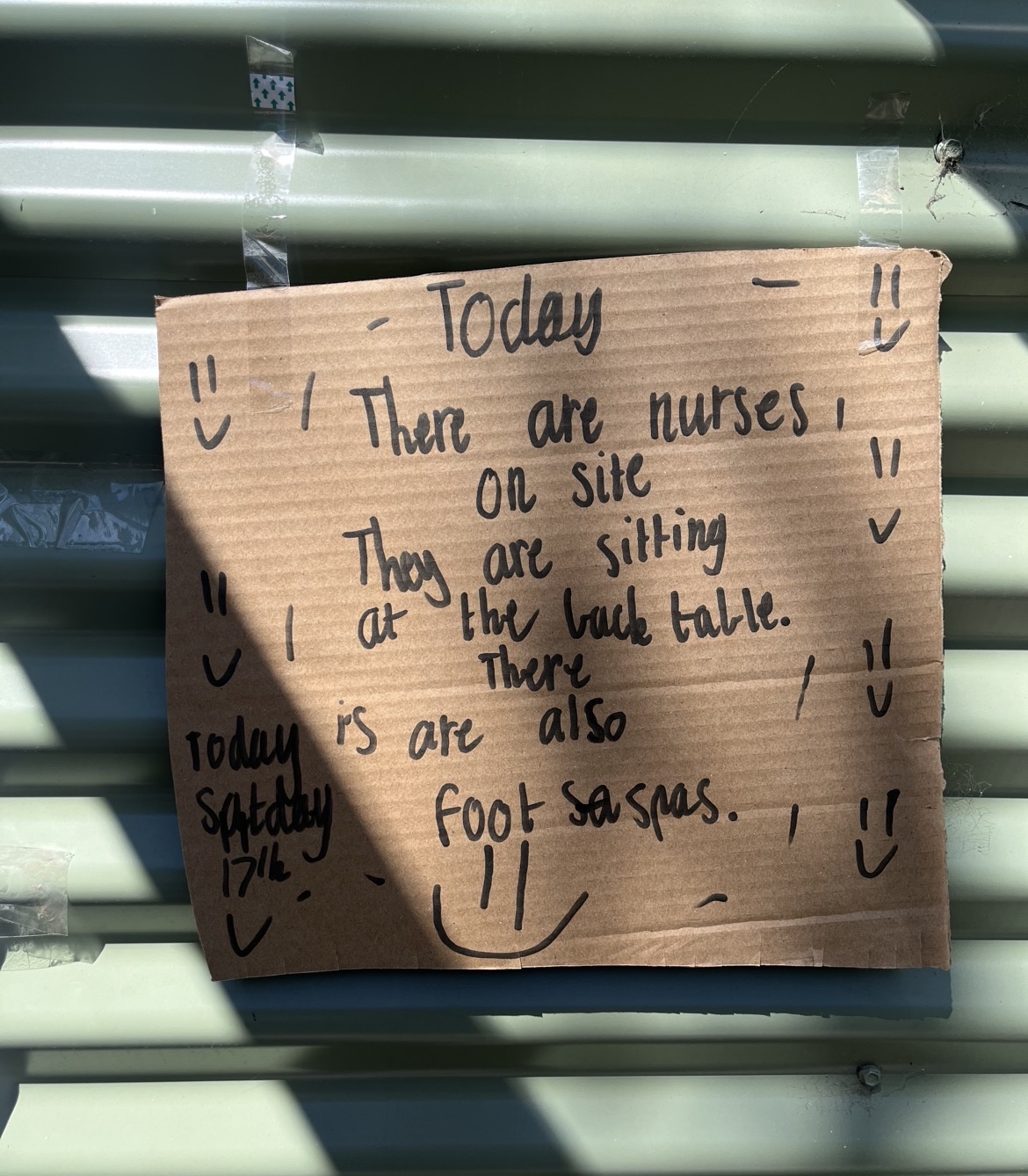
When devastating fires swept through Victoria’s Longwood region in January 2026, the Ruffy Community Hall became a place of refuge, connection and support. Amid the aftermath, a simple offering of warm footbaths created an unexpected space for rest and healing. What began with three young girls soon drew in parents, grandparents and farmers, who sat with their feet in warm water and began sharing stories of shock, grief and exhaustion. As the afternoon unfolded, bubbles drifted through the air above the gathered community — a gentle reminder that even the smallest gesture of care can create a moment of connection, comfort and hope in the midst of crisis.